FDA’s Zero-Tolerance Standard for Pathogens
Monday, 06 April 2026
You are a processor exporting to the U.S. or planning to. If the Preventive Controls rule (PC rule) applies to you, then you need a compliant Food Safety Plan hashtag#fsp. And, If you’re a PCQI, you should be familiar with the 21 CFR §117.136 under the PC rule. The provision that allows a manufacturer to rely on a downstream customer to control an identified hazard, instead of implementing a preventive control at their own facility. So, does that mean you can legally ship a product with a known pathogen hazard… without controlling it? Be cautious with the interpretation. This is one of the provisions that might be misread/misinterpreted. The answer may be a “yes”, but only under tightly defined conditions. I underline “tightly defined”. Because this is true only under very specific, tightly controlled conditions. It’s a conditional regulatory pathway, built on documentation, disclosure, and accountability. When does downstream reliance apply? This is especially relevant in supply chain situations where a facility receives raw materials that may carry inherent hazards, but has no lethal step to eliminate them, e.g., raw cocoa, coffee beans, flour, grains.. In such cases, control is intentionally placed downstream, not ignored. All these conditions should me met: Does this relax zero tolerance policy for pathogens such as Salmonella? No. § 117.136 addresses a specific gap: your facility has no lethal step to eliminate hazards inherent in raw ingredients. It does not mean a facility can allow Salmonella to persist and expect the customer to clean it up. FDA expectations for Listeria monocytogenes and Salmonella do not disappear at handoff. And under the FD&C Act, food must not be adulterated, regardless of where in the chain control is applied. What this provision does NOT mean It is not a relaxation of pathogen standards.Zero-tolerance expectations for Salmonella and Listeria monocytogenes remain in full effect at every step in the chain. It is not a default option.This is a conditional, documented pathway; it applies only where your process genuinely cannot control the hazard. It is not an exemption from GMP or sanitation.You must still prevent contamination and ensure your process does not introduce or amplify hazards. It is not a transfer of legal accountability.Under the FD&C Act, food must not be adulterated; this applies regardless of where in the chain control is applied. Therefore, even when control is deferred, you must still: Control may be transferred under certain conditions, but your responsibility cannot be, and that does not mean the zero-tolerance policy is relaxed. If you have questions about what FDA registration means for your facility, which regulations apply to your operation, or how to design compliant food labels and build a compliant HACCP and Food Safety Plan for the US and EU market, DFK Safe Food Environment provides regulatory consulting, FSPCA training, and FSMA compliance support for domestic and international food businesses.
- Published in FDA Compliance, Food safety and trade, FSMA
51% of DG SANTE Agri-Food Controls in 2026 Target Third Countries: Inside the European Commission’s Audit Programme
Saturday, 28 February 2026
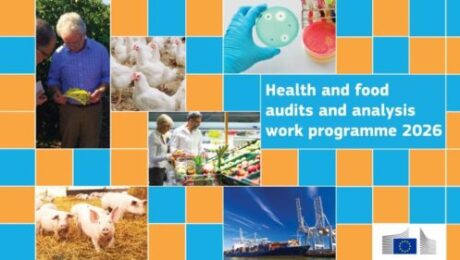
The European Commission’s 2026 Health and Food Audits and Analysis Programme sends an important signal to global agri-food exporters. The message is clear:EU import controls are entering a new phase of intensified scrutiny. In response to rising concerns around food safety, regulatory alignment, and the integrity of third-country control systems, the EU is significantly scaling up audits of non-EU countries. The focus areas for 2026 include: 🔸 Pesticide residues🔸 Pharmacologically active substances in animal products🔸 Contaminants and mycotoxins🔸 Food contact materials (including recycled plastics)🔸 Microbiological risks🔸 Animal health and welfare standards The Commission has committed to a 50% increase in audits of non-EU countries between 2025–2027. In 2026 alone, 51% of agri-food controls will target non-EU countries, compared to 33% in 2025. For exporters to the EU market, this marks a structural recalibration of import scrutiny. The emphasis is no longer limited to product-level compliance, it extends to the robustness of official control systems in exporting countries. In times of geopolitical instability and economic uncertainty, regulatory certainty becomes even more critical. The EU is reinforcing its food safety perimeter. If your business exports to the European Union, 2026 will require: 🔸 Robust residue monitoring aligned with EU MRLs🔸 Strong and defensible official certification systems🔸 Full traceability across the supply chain🔸 A documented and demonstrable compliance culture🔸 Preparedness for on-site Commission audits Preparedness is not optional. It is strategic for market growth and business expansion. Below is the list of sectors falling under heightened European Commission scrutiny in 2026, together with the planned audits for non-EU countries. dfk DFK Safe Food Environment · Regulatory Services EU Food SafetyIncreased Audits 2026 Food categories under highest scrutiny in third-country controls, verified from the European Commission DG SANTE Health and Food Audits and Analysis Programme 2026 159 Total Controls 51% Non-EU Focus, up from 33% 150 Audits Planned ~50% Increase in non-EU audit share 2025-27 Food Categories Ranked by Planned Audit Intensity, Third Countries # Food Category and Scope Audits Relative Intensity Priority 1 Fish, Fishery Products and Fish Oil China, Chile, Oman, Panama, Türkiye, Uruguay; plus 7 desk-based audits (Papua New Guinea, Senegal, Cabo Verde, Solomon Islands, Taiwan, Nigeria, Malaysia) 13audits High 2 Residues of Pharmacologically Active Substances, Food of Animal Origin Tunisia, Panama, Bosnia and Herzegovina, Cambodia, Republic of Korea, Bangladesh, Uruguay, Türkiye, Moldova, plus 1 TBD; desk-based assessment of 30 non-EU countries 10audits High 3 Plants and Plant Products, Phytosanitary Controls Uganda, Costa Rica, China, Japan (Bonsai), Peru, Thailand, plus 1 TBD 7audits High 4 Pesticide Residues, Food of Plant Origin Kenya, Thailand, Sri Lanka, Bangladesh, Madagascar 5audits High 5 Food Contact Materials, Recycled Plastics United Kingdom, India, Türkiye, China; first coordinated audit programme on this topic launched in 2026 4audits New Topic 6 Meat and Meat Products, Beef and Poultry Brazil (beef), Argentina (poultry and wild hare), United Kingdom (beef), Uruguay (beef) 4audits Medium 7 Animal Health, Poultry Meat and Eggs China, Thailand, United States 3audits Medium 8 Live Bivalve Molluscs Japan, Vietnam 2audits Medium 9 Microbiological Safety, Food of Non-Animal Origin Serbia, Türkiye 2audits Medium 10 Contaminants, Food of Non-Animal Origin United States; Türkiye (product-specific details per Annex 4 country audit descriptions: aflatoxin in peanuts; mycotoxins in pistachios and dried figs) 2audits Medium Primary Risk Concerns Driving the 2026 Audit Programme Pesticide Residues (MRL Compliance) Veterinary Drug Residues Mycotoxins and Aflatoxins Microbiological Safety Food Contact Material Migration Animal Disease Certification Chemical Contaminants (incl. heavy metals, where relevant) Antimicrobial Resistance (AMR) Countries Facing Multiple Audit Topics in 2026 Türkiye Vet. drug residues, pesticides and contaminants Fishery product production controls Food contact materials (recycled plastic) Mycotoxins in pistachios and dried figs Microbiological safety (FNAO) Food irradiation facilities China Poultry meat and eggs, animal health Fish oil for human consumption Food contact materials (recycled plastic) Plant and plant products export controls Uruguay Fishery products Beef production controls Vet. drug residues and contaminants Bangladesh Pesticide residues, food of plant origin Vet. drug residues and contaminants Panama Fish oil for human consumption Vet. drug residues and contaminants Thailand Poultry meat and eggs, animal health Pesticide residues, food of plant origin Plant and plant products export controls New Audit Topics Launched in 2026 Fish Oil: first coordinated audit programme on this topic, covering China, Chile, Oman, Panama; EU Member States France and Germany, targeting products for human consumption. Food Contact Materials with Recycled Plastics: first coordinated audit programme on this topic in EU (Netherlands, Poland) and third countries (UK, India, Türkiye, China), addressing chemical migration risks from recycled packaging. How Audit Outcomes Affect Market Access A negative Commission audit outcome in a third country can trigger trade-restrictive measures including enhanced border checks or import suspension. Audits verify the competent authority’s official control system, not just individual product lots. Results are published on the DG SANTE audit portal and inform EU import policy decisions. Source: EC DG SANTE · Health and Food Audits and Analysis Programme 2026 · EW-01-25-098-EN-N dfk Safe Food Environment
- Published in EU regulatory compliance, Food safety and trade
When Supplier Controls Matter More Than Your Own CCPs
Monday, 16 February 2026
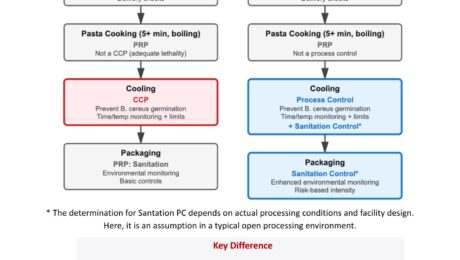
A single ingredient , pre-cooked pasta, caused 7 deaths, 28 illnesses, 27 hospitalizations and brought 6+ brands into recall. This multistate Listeria monocytogenes outbreak was linked to prepared, ready-to-eat pasta meals. We are not here to speculate about failure or assign blame. But we should reflect. Irrespective of this specific case, where the exact root cause and system robustness are not fully clear, such incidents remind us of something critical: It is time for food safety to move beyond a purely HACCP-centered mindset. HACCP asks: That logic is vital, indispensable. But it is not sufficient. When conducting risk assessments and determining management strategies, food businesses must go beyond labeling controls as CCPs or PRPs. We need a broader, risk-based Food Safety Plan mindset. In cases like this, pre-cooked, hydrated components used in RTE foods inherently require elevated scrutiny not because something necessarily failed, but because the risk profile demands it. A broader system means: • Strong supply-chain preventive controls for high-risk ingredients.HACCP often treats supplier controls as PRPs. A Food Safety Plan treats high-risk incoming ingredients as Supply Chain Preventive Controls, applying CCP-equivalent rigor. • Sanitation Preventive Controls when the hazard is environmentalWhen environmental contamination is a reasonably foreseeable hazard, sanitation is no longer “just a PRP”, it becomes a managed preventive control. • Allergen Preventive Controls where cross-contact risk is significant.When severity is high, allergen management requires structured and robust preventive controls. • Verification beyond documentation.Does your supplier have validated preventive controls?Are you reviewing real performance data and environmental monitoring trends — not just Certificates of Analysis? • Environmental monitoring expectations at supplier level, where relevant. • Risk-based intensity of oversight proportional to severity. • and more…. Food Safety Plans change how we think. They shift us from diagram compliance to hazard-control strategy design. And that shift is not theoretical. It is necessary. If you manufacture or brand RTE foods, your strongest critical control may ALSO sit at your supplier’s site. I have prepared a very simplified illustration showing how HACCP and a Food Safety Plan approach may differ, both at the level of the pre-cooked pasta manufacturer and at the level of the brand owner using it in finished RTE products. Have a look at it here: If you have questions about what FDA registration means for your facility, which regulations apply to your operation, or how to design compliant food labels and build a compliant HACCP and Food Safety Plan for the US and EU market, DFK Safe Food Environment provides regulatory consulting, FSPCA training, and FSMA compliance support for domestic and international food businesses.
- Published in FDA Compliance, Food safety and trade, FSMA
The decision of when and which validation study approach to adopt
Friday, 24 March 2023
The PCQI course participants often showed a particular interest in the topic of validation, when and how to validate, what is acceptable and what is not, with regards to compliance with the FDA requirements. The Preventive Controls for Human Food requirements stipulate in 21 CFR 117.160: (a) You must validate that the preventive controls identified and implemented in accordance with § 117.135 are adequate to control the hazard as appropriate to the nature of the preventive control and its role in the facility’s food safety system. (b) The validation of the preventive controls must be performed (or overseen) by a preventive controls qualified individual. According to § 117.3 Definitions, validation means obtaining and evaluating scientific and technical evidence that a control measure, combination of control measures, or the food safety plan as a whole, when properly implemented, is capable of effectively controlling the identified hazards. While the Preventive Controls for Human rule provided flexibility in justifying the reasons not to validate sanitation preventive controls, allergen preventive controls, and others – except in certain conditions (to be discussed in the next post), validation of process controls is a must-to-do. This decision tree , published by Ceylan et al. 2021 in Comprehensive Reviews in Food Science and Food Safety, is a practical and simple tool to use in supporting the decision of when and which validation study approach is most applicable. You find the decision tree in the link provided above to access the full article. If you find it useful, why not sharing it with you team members to enhance their knowledge on the importance of science-based approach in food safety. Got questions on your FSP and risk assessment, or on regulatory matters? I will be happy to hear from you.
- Published in FDA Compliance, Food safety and trade, FSMA
The All-Too-Human Causes of Food Safety System Shortfalls
Sunday, 29 August 2021
Moving from knowledge-based to behavior-based training might be key to culture change An article published in the Food Safety Magazine, August 12, 2021 Given the continued growth of trade agreements and exchanges between countries and the evolution of production methods to meet international market needs, our food supply has developed significantly over the last several decades. A wide array of our food products are made from ingredients and packaging sourced from different suppliers worldwide, resulting in rapid movements of food products and globalized food transport. The “international agro-food trade network,” constructed using the United Nations (UN)’s food-trade data, shows the dense web of food trade connections among seven central countries that trade with more than 77 percent of the 207 countries from which the UN gathers information.1 While this vast trade network enhances accessibility to food, considerable risks emerge with the amplified production and intensive handling of raw materials across the supply chain, further complicating the tracing of food sources or foodborne hazards in multiple actors’ global supply chain. Given the continued growth of trade agreements and exchanges between countries and the evolution of production methods to meet international market needs, our food supply has developed significantly over the last several decades. A wide array of our food products are made from ingredients and packaging sourced from different suppliers worldwide, resulting in rapid movements of food products and globalized food transport. The “international agro-food trade network,” constructed using the United Nations (UN)’s food-trade data, shows the dense web of food trade connections among seven central countries that trade with more than 77 percent of the 207 countries from which the UN gathers information.1 While this vast trade network enhances accessibility to food, considerable risks emerge with the amplified production and intensive handling of raw materials across the supply chain, further complicating the tracing of food sources or foodborne hazards in multiple actors’ global supply chain. Indeed, a loss of control or oversight at any step of the supply chain could lead to detrimental economic and public health consequences. In 2011, one of the largest outbreaks of a foodborne illness was caused by enterohemorrhagic Escherichia coli O104:H4. The deadly strain caused approximately 3,000 hospitalized cases, 855 of them due to hemolytic uremic syndrome. It also led to 55 deaths, primarily in Germany, with scattered cases in 15 other countries in Europe and North America. As the strain source was still unknown, the blame was falsely directed at Spanish cucumbers and tomatoes. Consequently, a Russian ban on imports of all European Union fresh produce, followed by the EU’s ban on the import and sale of fenugreek seeds, which was eventually shown to be the culprit, caused substantial economic losses to farmers and industries.2 Such an outbreak demonstrates how local infection agents can bring about widespread economic and health threat. “Food safety systems are vital to control food safety risks, but they are not a silver bullet.” Dima Faour-Klingbeil Understanding Global Challenges Inadequate Food Safety Management Systems The global food market’s rising challenges rationalize the strict measures the food industry should take and the urgency to adopt stringent risk-based preventive food safety standards to minimize the health risks associated with consuming unsafe food products. Introduced in the 1960s by the U.S. National Aeronautics and Space Administration, the Hazard Analysis and Critical Control Points (HACCP) preventive approach was further developed by the food industry (i.e., Pillsbury). Later on, HACCP was advocated and promulgated by international organizations and mandated by regulatory agencies such as the U.S. Food and Drug Administration as an effective preventive tool to manage the hazards throughout the farm-to-fork continuum and reduce the risks associated with foodborne diseases. At the same time, driven by legal obligations to exercise due diligence and safe food production, industry stakeholders, such as retailers and nonprofit organizations, developed voluntary private food safety standards that integrate the HACCP system advocated by Codex Alimentarius to protect the reputations of businesses. Although voluntary, they generally became de facto mandatory standards that set out requirements for a risk-based food safety management system that were stricter than regulatory standards. Progressively, they were established to ensure compliance with customers’ demands and regulatory requirements while addressing fraud and intentional adulteration in a global market. Food safety systems are vital to control food safety risks, but they are not a silver bullet. Despite improvements in prevention systems, food recalls and illness outbreaks continue to hit the headlines, sometimes caused by food companies that passed certification audits of their food safety systems. A case in point is the massive multistate Salmonella outbreak caused by Peanut Corporation of America, which reportedly scored high on a third-party certification audit report.3 Read all the article in the Food Safety Magazine
- Published in Food safety and trade
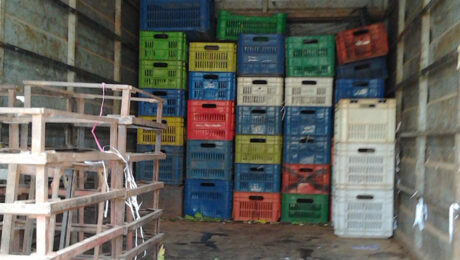
UAE ban on import of fruits and vegetables: the national standards is a priority
Thursday, 08 October 2020
Translated version (brief) of my column in the arabic Al-Akhbar newspaper الحظر الإماراتي لاستيراد الفواكه والخضار: سلامة المعايير الوطنية أولويةhttp://www.al-akhbar.com/node/276723 Recently, the UAE banned the importation of vegetables and fruits from Lebanon and other countries because they contain high levels of pesticide residues that exceed the permitted levels according to their own standards. According to Al Bayan newspaper published in Dubai on 25 April 2017, the ban includes all types of apples from Lebanon. There is no doubt that this decision affects primarily farmers, and thus the process of accessing markets and avoiding the surplus, which has become a chronic problem for this sector. What are the backgrounds and present conditions of Lebanese fresh produce and how can it be improved? In general, the States establish their national standards to determine permitted levels of pesticide residues, and when countries lack the resources to establish their own national pesticide management program, they adopt the international standards developed by the WHO Codex Alimentarius Commission. According to regulations, It is permitted to use pesticides that have been scientifically proven to be effective without causing harmful effects to consumers, farmers, animals, and the environment. The use of pesticides is authorized or approved after the maximum residual limits (MRLs) in food or feed products are determined. It should be noted that exceeding the permissible limits does not necessarily mean the levels of residues pose a risk to human health because the permissible limits are so determined that the resulting exposure to MRL is much lower than the levels that can cause a serious or chronic health hazard. However, this does not eliminate cases where the residues beyond acceptable limits may pose a health risk to the consumers and require rapid intervention to withdraw products from the markets. Another important reason is that GAP standards and permissible limits for pesticides may differ from one country to another, i.e., the MRLs of the importing countries are higher than what is actually being applied in the exporting country. Agricultural Extension The UAE’s rejection of Lebanese products is nothing new. In 2001, the United States rejected 27% of food exports from Egypt, Jordan, Lebanon and Syria due to non-compliance with food safety measures (filth and microbiological contamination, high levels of pesticide residues). Between 2010 and 2013, a project funded by the Food and Agriculture Organization of the United Nations (FAO) was implemented with the aim of promoting the production and marketing of Lebanese agricultural products and ensuring food security, quality system, and good practices. The project focused on the development and application of good agricultural practices targeting three major crops: grapes, citrus, and apples. This has called for the establishment of a technical working group (TWG) to facilitate the adoption of international or national standards, quality assurance systems, food safety and environmental management by fruit and vegetable producers and other actors in the agricultural production chain. However, until 2016, the proposal to establish the TWG was not yet been ratified. In fact, the good agricultural practices and the integrated pest management are promoted through extension services. However, since 2005, Lebanon has not had an updated budget to cover these areas. The agricultural sector has relied on external financing that does not provide a sustainable solution and may lead to several risks associated with improper agricultural practices, especially in the absence of national laws and standards. Bacterial contamination in the food chain In this context, I would like to shed light on our study that was published in the Journal of Food Control (2016) and that was partially funded by the National Council for Scientific Research which examined the microbiological safety of fresh produce (vegetables) from farm to the wholesale market. The results showed high levels of fecal indicators (E. coli and coliform) on parsley, lettuce, and radish and that the contamination levels increased from the fields to the washing facilities indicating possible sources of contamination at all stages of the food chain and particularly in the post-harvest washing stages where Salmonella was isolated. The presence of other pathogenic microorganisms, Listeria monocytogenes and Staphylococcus aureus in 14% and 45% of the samples taken from the fields and all the points of the chain to the restaurants (restaurants were covered in a separate work) respectively, were concerning. The fieldwork has shown unacceptable hygiene standards throughout the post-harvest stages and the use of untreated wastewater for the irrigation of crops. Details are available in here. Along these lines, parsley and lettuce in the wholesale market were classified by size. It was common, for example, to hear that parsley or lettuce that are irrigated with sewage are bigger and therefore more profitable. I will put here some quotes from the interviewed farmers : “I know this water is contaminated with nitrates and other chemicals, but the use of sewage does not hurt.” Or someone else who said: “lettuce is bigger with the use of sewage”, and ” the sewage gives a bigger size and reduces the use of fertilizers”. Another said, “ the polluted water of the river does not hurt, see how this lettuce looks great!” It is well recognized that bacteria can be transferred to agricultural products through irrigation and post-harvest wash water; hence, in the Leafy Green annex of the Code of hygienic practice for fresh fruit and vegetables-CAC/RCP 53–2003, Codex Alimentarius provided general recommendations stating that water that comes into substantial contact with the edible portion of the leafy vegetable should meet the standards for potable or clean water, i.e., which meets the quality standards of drinking water such as described in the WHO Guidelines for Drinking Water Quality and or that does not compromise food safety in the circumstances of its use. The entry to the international markets is a major challenge considering the growing burden of food outbreaks associated with the consumption of fresh vegetables and fruit and so the strict monitoring and constant updating of international standards such as the FDA Food Safety Modernization Act (FSMA) which introduced a comprehensive reform of the food safety laws and imposed stringent
- Published in Food safety and trade

Avoid the mistake of assuming HACCP and GFSI compliance will meet the FSMA requirements
Thursday, 08 October 2020
I have met recently with few representatives from the food industry and it appeared from our discussions that many were still unaware of the difference between the GFSI certification and FSMA compliance. For them, both equate, and the only steps required to export foods to the US market is to go through the registration process. There was some confusion about the mandatory requirement to develop and implement a Food Safety Plan (FSP) which was assumed to be the same as their existing HACCP plan, which is not the case. Certification to a GFSI-benchmarked scheme (BRC, SQF, FSSC22000, IFS, etc.) and having an HACCP plan do not make the food facility compliant with the FSMA Preventive Controls Rule, yet it does make it ready to reach compliance. While HACCP focuses on the determination of the Critical Control Points (CCPs) to prevent post-process contamination, under FSMA, the FSP goes far beyond the determination of the CCPs during processing to include risk-based preventive controls that are determined as critical elements in the sanitation and allergen control programs, and in the supplier chain program. The FSP must be created and overseen by a preventive controls-qualified individual (PCQI) and should be based on: 1- Hazard Analysis, identifying known or reasonably foreseeable biological, chemical, radiological and physical hazards 2- Documentation (written) of preventive controls including process controls, food allergen controls and sanitation controls, supply chain controls, and a recall plan 3- Documented implementation procedures which include monitoring the implementation of the preventive controls, corrective action, and verification procedures. To export foods to the US market, It is mandatory to develop the Food Safety Plan that is compliant with FSMA Preventive Rule, NOT with HACCP The difference between HACCP and GFSI compliance or to FSMA might not be practically easy to grasp without a PCQI training. Why it is important to train PCQIs? Under the FSMA rule, FDA is permitted to inspect domestic and foreign facilities (those based on non-US territories) at the times and in the manner permitted by the FD&C Act. As part of this, the FSP is inspected for its adequacy and any deficiencies or inadequacies identified means the PCQI (individual who developed the FSP) is not appropriately trained for the application of the risk-based preventive controls. The difference between HACCP / GFSI compliance and FSMA might not be practically easy to grasp without a PCQI training What may result out of this? In the event of having an inadequate food safety plan developed by unqualified staff, various scenarios are possible depending on the severity of the identified failure or if the food presents a threat of serious adverse health consequences or death to humans. Therefore, the FDA can take actions such as: suspension of the food facilities’ registration, product detention, issuing a warning letter and criminal charges and add to this the costly re-inspection visits. The cost for a foreign facility is $285 per hour. Ensuring the FSP is prepared and overseen by a trained PCQI is certainly an added value and crucial to avoid the above mistakes. To help the food industry complies with the requirements of the Preventive Controls rules, the Food Safety Preventive Controls Alliance (FSPCA) developed the FDA-approved standardized curriculum for training PCQIs. As a PCQI Lead Instructor, I am offering public and in-house FSPCA certified PCQI training. For more information on locations and dates, please follow the link here and navigate the calendar. You are welcome to subscribe to the newsletter to keep you updated on the PCQI training that will be organized in Germany and selected countries in the MENA region for the year 2019.
- Published in FDA Compliance, Food safety and trade, FSMA