Safety and quality of water use and reuse in the production and processing of dairy products
Wednesday, 07 June 2023
In 2020, the 43rd session of the Codex Alimentarius Commission approved the new work entitled “Development of Guidelines for the Safe Use and Reuse of Water in Food Production” proposed by the 51st session of the Codex Committee on Food Hygiene. To support this work, the Joint FAO/WHO Expert Meeting on Microbiological Risk Assessment (JEMRA) was asked to provide scientific advice regarding safe use and reuse of water in the dairy sector. Dr. Dima participated in the JEMRA experts panel tasked to provide clear and practical guidance on risk-based approaches to assess and manage fit-for-purpose water sourcing, use and reuse in the dairy sector. The collective efforts led to publication of a report that describes the application of the concept of fit-for-purpose water for use in the production and processing of dairy products. Report available in this link: FAO & WHO. 2023. Safety and quality of water use and reuse in the production and processing of dairyproducts – Meeting report. Microbiological Risk Assessment Series, No. 40. Rome, FAO.https://doi.org/10.4060/cc4081en
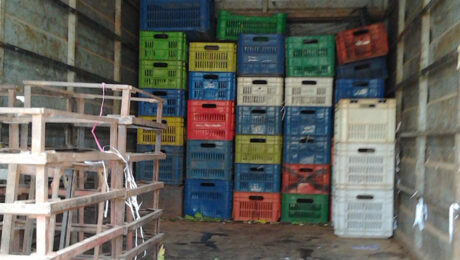
UAE ban on import of fruits and vegetables: the national standards is a priority
Thursday, 08 October 2020
Translated version (brief) of my column in the arabic Al-Akhbar newspaper الحظر الإماراتي لاستيراد الفواكه والخضار: سلامة المعايير الوطنية أولويةhttp://www.al-akhbar.com/node/276723 Recently, the UAE banned the importation of vegetables and fruits from Lebanon and other countries because they contain high levels of pesticide residues that exceed the permitted levels according to their own standards. According to Al Bayan newspaper published in Dubai on 25 April 2017, the ban includes all types of apples from Lebanon. There is no doubt that this decision affects primarily farmers, and thus the process of accessing markets and avoiding the surplus, which has become a chronic problem for this sector. What are the backgrounds and present conditions of Lebanese fresh produce and how can it be improved? In general, the States establish their national standards to determine permitted levels of pesticide residues, and when countries lack the resources to establish their own national pesticide management program, they adopt the international standards developed by the WHO Codex Alimentarius Commission. According to regulations, It is permitted to use pesticides that have been scientifically proven to be effective without causing harmful effects to consumers, farmers, animals, and the environment. The use of pesticides is authorized or approved after the maximum residual limits (MRLs) in food or feed products are determined. It should be noted that exceeding the permissible limits does not necessarily mean the levels of residues pose a risk to human health because the permissible limits are so determined that the resulting exposure to MRL is much lower than the levels that can cause a serious or chronic health hazard. However, this does not eliminate cases where the residues beyond acceptable limits may pose a health risk to the consumers and require rapid intervention to withdraw products from the markets. Another important reason is that GAP standards and permissible limits for pesticides may differ from one country to another, i.e., the MRLs of the importing countries are higher than what is actually being applied in the exporting country. Agricultural Extension The UAE’s rejection of Lebanese products is nothing new. In 2001, the United States rejected 27% of food exports from Egypt, Jordan, Lebanon and Syria due to non-compliance with food safety measures (filth and microbiological contamination, high levels of pesticide residues). Between 2010 and 2013, a project funded by the Food and Agriculture Organization of the United Nations (FAO) was implemented with the aim of promoting the production and marketing of Lebanese agricultural products and ensuring food security, quality system, and good practices. The project focused on the development and application of good agricultural practices targeting three major crops: grapes, citrus, and apples. This has called for the establishment of a technical working group (TWG) to facilitate the adoption of international or national standards, quality assurance systems, food safety and environmental management by fruit and vegetable producers and other actors in the agricultural production chain. However, until 2016, the proposal to establish the TWG was not yet been ratified. In fact, the good agricultural practices and the integrated pest management are promoted through extension services. However, since 2005, Lebanon has not had an updated budget to cover these areas. The agricultural sector has relied on external financing that does not provide a sustainable solution and may lead to several risks associated with improper agricultural practices, especially in the absence of national laws and standards. Bacterial contamination in the food chain In this context, I would like to shed light on our study that was published in the Journal of Food Control (2016) and that was partially funded by the National Council for Scientific Research which examined the microbiological safety of fresh produce (vegetables) from farm to the wholesale market. The results showed high levels of fecal indicators (E. coli and coliform) on parsley, lettuce, and radish and that the contamination levels increased from the fields to the washing facilities indicating possible sources of contamination at all stages of the food chain and particularly in the post-harvest washing stages where Salmonella was isolated. The presence of other pathogenic microorganisms, Listeria monocytogenes and Staphylococcus aureus in 14% and 45% of the samples taken from the fields and all the points of the chain to the restaurants (restaurants were covered in a separate work) respectively, were concerning. The fieldwork has shown unacceptable hygiene standards throughout the post-harvest stages and the use of untreated wastewater for the irrigation of crops. Details are available in here. Along these lines, parsley and lettuce in the wholesale market were classified by size. It was common, for example, to hear that parsley or lettuce that are irrigated with sewage are bigger and therefore more profitable. I will put here some quotes from the interviewed farmers : “I know this water is contaminated with nitrates and other chemicals, but the use of sewage does not hurt.” Or someone else who said: “lettuce is bigger with the use of sewage”, and ” the sewage gives a bigger size and reduces the use of fertilizers”. Another said, “ the polluted water of the river does not hurt, see how this lettuce looks great!” It is well recognized that bacteria can be transferred to agricultural products through irrigation and post-harvest wash water; hence, in the Leafy Green annex of the Code of hygienic practice for fresh fruit and vegetables-CAC/RCP 53–2003, Codex Alimentarius provided general recommendations stating that water that comes into substantial contact with the edible portion of the leafy vegetable should meet the standards for potable or clean water, i.e., which meets the quality standards of drinking water such as described in the WHO Guidelines for Drinking Water Quality and or that does not compromise food safety in the circumstances of its use. The entry to the international markets is a major challenge considering the growing burden of food outbreaks associated with the consumption of fresh vegetables and fruit and so the strict monitoring and constant updating of international standards such as the FDA Food Safety Modernization Act (FSMA) which introduced a comprehensive reform of the food safety laws and imposed stringent
- Published in Food safety and trade
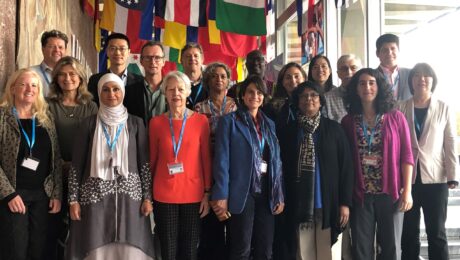
Joint FAO/WHO Expert meeting on the Safety and Quality of Water Used in Food Production and Processing
Saturday, 14 September 2019
Dr. Dima was invited to participate in the Joint FAO/WHO Expert meeting on the Safety and Quality of Water Used in Food Production and Processing in Geneva, Switzerland, 23-27 September 2019. The purpose of the meeting was to develop clear and practical guidance on the criteria and parameters that can be used to determine if water is ‘fit-for-purpose’ for several different agricultural purposes. This work is still under review. As a member of the FAO/WHO joint Expert Meeting on the Microbiological Risk Assessment (JEMRA), she contributed to developing practical guidance and fit-for-purpose microbiological criteria for water used in fresh fruit and vegetables and the published WHO document. Enjoy the read: FAO and WHO 2021. Safety and quality of water used with fresh fruits and vegetables. Microbiological Risk Assessment Series No. 37. Rome. https://doi.org/10.4060/cb7678en
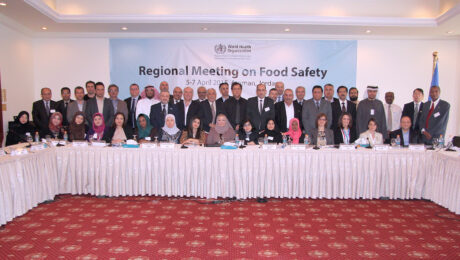
FAO Food Safety Meeting in Jordan
Tuesday, 14 April 2015
The WHO regional Centre for Environmental Health Action (CEHA), held a regional meeting for food safety officers appointed by ministries of health and ministries of agriculture in Amman, Jordan on 5–7 April 2015. Dr. Dima Faour-Klingbeil was invited as a speaker and temporary advisor. As part of the regional meeting, representatives from 19 countries along with international experts and several United Nations (UN) agencies took part in the regional celebration of the 2015 World Health Day on Food Safety on 7 April. The objectives of the meeting were to: • update participants on the state of food safety in the Region and Member States (status, gaps and challenges); • present emerging food safety issues and priorities at the global level; • identify areas to be strengthened and the way forward; and • celebrate World Health Day 2015 on Food Safety in the Eastern Mediterranean Region under the motto “From farm to plate – make food safe”. Dr. Dima’s presentation is found here.