
USAID TRADE Project: Developing ToT Food Safety Training Curricula, and Training SMEs on Allergen maanagement, Food Safety Culture, US and EU Food Labeling for Export Readiness
Tuesday, 26 March 2024
As part of the Export Enhancement Program under the USAID TRADE project, in collaboration with the Food Export Council (FEC), DFK has been dedicated to supporting SMEs and key stakeholders by enhancing their knowledge and capabilities. This initiative, which began in September 2022, continued through multiple training sessions held on: The objective of these sessions was to train and build the capacity of industry delegates and trainers on the FDA requirements under the FSMA preventive controls rule key and topics essential for international trade compliance and food safety, including: This effort continued through 2024 with the development of Trainer of Trainers (ToT) guidance documents, including: Through this project, DFK is empowering SMEs with the critical knowledge and skills needed to meet international standards, fostering safer food products and enhancing export capabilities.
FEC Webinar on the FSMA rules and the FDA requirements for food export – Egypt
Wednesday, 25 January 2023
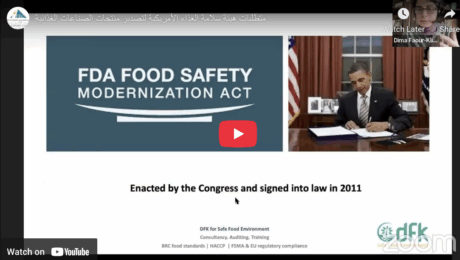
Dr Faour-Klingbeil offered a presentation on the FSMA rules and the FDA Requirements for Food Export during a webinar organized by the Food Export Council in Egypt on 18.01.2023 and attended by more than 95 participants. What are the FSMA rules? how does FSMA affects foreign facilities? what are the steps to meet the FDA requirements for food export? What is the responsibility of the PCQI? Watch here:
USAID Trade Reform & Development in Egypt (TRADE)- September 2022
Tuesday, 04 October 2022
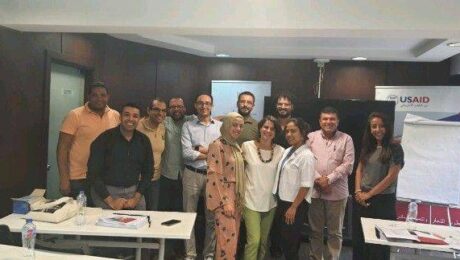
As part an on-going integrated capacity enhancement initiative of the USAID TRADE project to strengthen the Egyptian Food Export Council (FEC) and their members’ capacity to access the US market, Dr Faour-Klingbeil delivered the official course “Preventive Controls Qualified Individual (PCQI)” for 12 SMEs at the FEC premises from 20-22 September 2022. The course aimed to support Egyptian SMEs in the food sector better understand how to develop a Food Safety Plan and meet the FDA food safety requirements to improve compliance and enhance their market access and food exports. As part an on-going integrated capacity enhancement initiative of the USAID TRADE project to strengthen the Egyptian Food Export Council (FEC) and their members’ capacity to access the US market, Dr Faour-Klingbeil delivered the official course “Preventive Controls Qualified Individual (PCQI)” for 12 SMEs at the FEC premises from 20-22 September 2022. The course aimed to support Egyptian SMEs in the food sector better understand how to develop a Food Safety Plan and meet the FDA food safety requirements to improve compliance and enhance their market access and food exports.
FAFS Lecture Series | An overview of the FSMA and its implications for food exporters
Wednesday, 16 December 2020
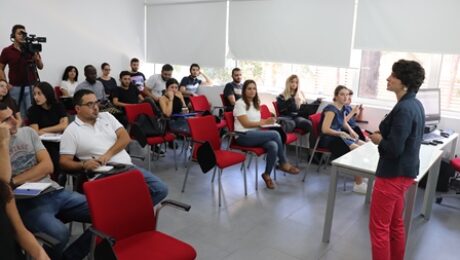
As part of the American University of Beirut FAFS (The Faculty of Agricultural and Food Sciences ) Lecture Series, Dr. Dima was invited to deliver an open lecture on “An overview of the Food and Drug Administration Food Safety Modernization Act (FSMA) and its implications for food exporters” that took place on the 10th of October 2019. About the lecture: Foodborne disease is a significant burden worldwide. In the United States, it is estimated that 48 million people get sick, 128 000 are hospitalized, and 3000 die annually from contaminated food or beverages. Prompted by the increasing prevalence of imports, high-profile food outbreaks, food fraud, and emerging hazards, the U.S. Food Safety Modernization Act was signed into law in 2011, the first historical reform to the legislative landscape of the food and beverage industry in over 70 years. FSMA has made fundamental changes to U.S. food laws. It shifted the focus of food safety from reactive to preventive approach and gave the U.S. Food and Drug Administration explicit authority and broader prevention mandate to protect consumers’ health. Instead of relying only on port-of-entry inspection, FSMA emphasizes key regulations that span across the food supply chain. Among other modifications, it imposes new responsibilities on food importers to verify that their foreign suppliers of food for human and animal consumption meet applicable FDA safety standards to ensure the safety of food imported into the U.S.

Customised Internal Training Course Development On the Current Good Manufacturing Practice, Hazard Analysis, and Risk-Based Preventive Controls Rule.
Friday, 30 October 2020
This engagement marked the beginning of a continuing collaboration with August Storck KG. In 2025, DFK was further engaged to conduct a pre-FDA inspection compliance audit at the company’s Berlin chocolate manufacturing facility, reflecting Storck’s continued commitment to strengthening their food safety systems and maintaining alignment with U.S. FDA export requirements.

Avoid the mistake of assuming HACCP and GFSI compliance will meet the FSMA requirements
Thursday, 08 October 2020
I have met recently with few representatives from the food industry and it appeared from our discussions that many were still unaware of the difference between the GFSI certification and FSMA compliance. For them, both equate, and the only steps required to export foods to the US market is to go through the registration process. There was some confusion about the mandatory requirement to develop and implement a Food Safety Plan (FSP) which was assumed to be the same as their existing HACCP plan, which is not the case. Certification to a GFSI-benchmarked scheme (BRC, SQF, FSSC22000, IFS, etc.) and having an HACCP plan do not make the food facility compliant with the FSMA Preventive Controls Rule, yet it does make it ready to reach compliance. While HACCP focuses on the determination of the Critical Control Points (CCPs) to prevent post-process contamination, under FSMA, the FSP goes far beyond the determination of the CCPs during processing to include risk-based preventive controls that are determined as critical elements in the sanitation and allergen control programs, and in the supplier chain program. The FSP must be created and overseen by a preventive controls-qualified individual (PCQI) and should be based on: 1- Hazard Analysis, identifying known or reasonably foreseeable biological, chemical, radiological and physical hazards 2- Documentation (written) of preventive controls including process controls, food allergen controls and sanitation controls, supply chain controls, and a recall plan 3- Documented implementation procedures which include monitoring the implementation of the preventive controls, corrective action, and verification procedures. To export foods to the US market, It is mandatory to develop the Food Safety Plan that is compliant with FSMA Preventive Rule, NOT with HACCP The difference between HACCP and GFSI compliance or to FSMA might not be practically easy to grasp without a PCQI training. Why it is important to train PCQIs? Under the FSMA rule, FDA is permitted to inspect domestic and foreign facilities (those based on non-US territories) at the times and in the manner permitted by the FD&C Act. As part of this, the FSP is inspected for its adequacy and any deficiencies or inadequacies identified means the PCQI (individual who developed the FSP) is not appropriately trained for the application of the risk-based preventive controls. The difference between HACCP / GFSI compliance and FSMA might not be practically easy to grasp without a PCQI training What may result out of this? In the event of having an inadequate food safety plan developed by unqualified staff, various scenarios are possible depending on the severity of the identified failure or if the food presents a threat of serious adverse health consequences or death to humans. Therefore, the FDA can take actions such as: suspension of the food facilities’ registration, product detention, issuing a warning letter and criminal charges and add to this the costly re-inspection visits. The cost for a foreign facility is $285 per hour. Ensuring the FSP is prepared and overseen by a trained PCQI is certainly an added value and crucial to avoid the above mistakes. To help the food industry complies with the requirements of the Preventive Controls rules, the Food Safety Preventive Controls Alliance (FSPCA) developed the FDA-approved standardized curriculum for training PCQIs. As a PCQI Lead Instructor, I am offering public and in-house FSPCA certified PCQI training. For more information on locations and dates, please follow the link here and navigate the calendar. You are welcome to subscribe to the newsletter to keep you updated on the PCQI training that will be organized in Germany and selected countries in the MENA region for the year 2019.
- Published in FDA Compliance, Food safety and trade, FSMA