
Vocational Curriculum Development in Food Technology
Thursday, 02 April 2026
Vocational Curriculum Development · Icon-Institut GmbH · German Development Cooperation · November 2024 – March 2025 Dr. Faour-Klingbeil was contracted by Icon-Institut GmbH as Food Technology Expert under the GIZ-supported project “Technical Support for the Comprehensive Technical Education Initiative with Egypt”, part of the German Development Cooperation programme on Sectoral Competence Development in Agribusiness, Food Processing, and Tourism and Hospitality. Her role focused on designing the programme framework for a dual vocational education curriculum in Food Technology, developed for official endorsement by Egypt’s Ministry of Education and Technical Education (MoETE) as a national qualification. The work supported the alignment of Egypt’s technical education system with labor market needs and international standards. The curriculum framework was structured around a DACUM-based, competency-based approach, developed in close collaboration with private-sector food industry stakeholders. Competencies were mapped to real business processes and designed for coherent delivery across school-based and company-based training environments.
Dr. Faour-Klingbeil Joins AUB’s Food Safety Diploma to Teach U.S. and EU Food Safety Law
Thursday, 02 April 2026
Dr. Faour-Klingbeil has joined the American University of Beirut’s Risk Management in Food Safety Online Professional Diploma program, where she is responsible for developing and delivering the course “Food Safety Policy and Regulations”. The course covers the regulatory frameworks governing food safety policy in the US and EU, with practical application to risk management decisions in the food industry. Dr. Faour-Klingbeil is responsible for course design, teaching, student support, and assessment across three semesters, starting from April 2026.
USAID TRADE Project: Developing ToT Food Safety Training Curricula, and Training SMEs on Allergen maanagement, Food Safety Culture, US and EU Food Labeling for Export Readiness
Tuesday, 26 March 2024
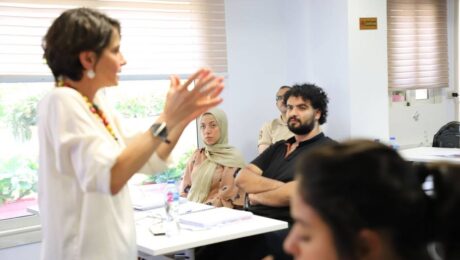
As part of the Export Enhancement Program under the USAID TRADE project, in collaboration with the Food Export Council (FEC), DFK has been dedicated to supporting SMEs and key stakeholders by enhancing their knowledge and capabilities. This initiative, which began in September 2022, continued through multiple training sessions held on: The objective of these sessions was to train and build the capacity of industry delegates and trainers on the FDA requirements under the FSMA preventive controls rule key and topics essential for international trade compliance and food safety, including: This effort continued through 2024 with the development of Trainer of Trainers (ToT) guidance documents, including: Through this project, DFK is empowering SMEs with the critical knowledge and skills needed to meet international standards, fostering safer food products and enhancing export capabilities.
DFK Empowers FEC Members for Global Food Export Success – A USAID Trade Reform & Development Projecy in Egypt (TRADE)
Tuesday, 26 September 2023
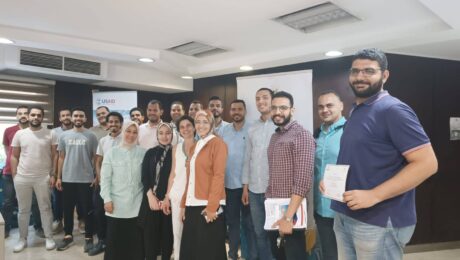
DFK has been entrusted with the development and delivery of an extensive training program as part of the three-day Export Enhancement Program, held by USAID TRADE, in collaboration with the Food Export Council (FEC), from 24-26 July, 2023 at FEC premises. With a remarkable turnout of over 60 participants, the workshop delved into vital topics, including EU and US food labeling requirements and allergen control programs. Its overarching goal was to fortify the capabilities of FEC members, enabling them to not only meet rigorous EU and US food safety regulations but also to thrive in expanding their presence in export markets. The upcoming training session scheduled for the end of November 2023 will focus on the development of a Food Safety Culture plan. Stay tuned for further updates on our journey to elevate food safety standards and empower our partners in the industry.
DFK Continues Its Collaboration with the Food Export Council, Delivering Guidance on FDA FSMA and Traceability RequirementsJuly 2023 – Cairo, Egypt
Sunday, 23 July 2023
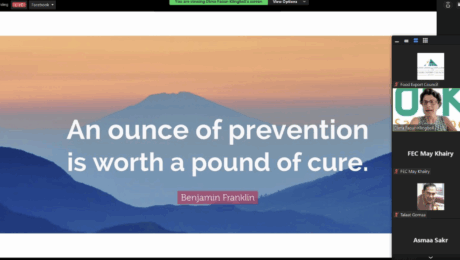
For the second consecutive year, DFK has strengthened its collaboration with the Food Export Council (FEC) to support Egyptian food manufacturers and exporters in meeting international regulatory requirements. As part of this ongoing partnership, Dr. Dima Faour-Klingbeil delivered a webinar in July focused on the U.S. Food Safety Modernization Act (FSMA) and the FDA’s Food Traceability Rule. The webinar organized and hosted by the FEC provided exporters with essential guidance for accessing and maintaining compliance in the U.S. food market. Dr. Faour-Klingbeil outlined the transformative nature of FSMA, the most comprehensive reform of U.S. food safety law in decades, which shifts the regulatory system from reacting to food safety incidents to preventing them. During the session, she explained FSMA’s core principles, including preventive controls, inspection and compliance mechanisms, import oversight, and the FDA’s authority to act swiftly on products suspected of contamination. She highlighted key rules that foreign suppliers must understand and especially the Foreign Supplier Verification Program (FSVP), which requires U.S. importers to verify that their foreign suppliers meet U.S. standards. A major focus of the webinar was the FDA’s Food Traceability Rule, which expands traceability requirements across the global food supply chain. Dr. Faour-Klingbeil detailed the obligations for documenting Key Data Elements (KDEs) and Critical Tracking Events (CTEs), underscoring the rule’s significance for high-risk foods and the need for robust record-keeping systems to enhance recall efficiency and supply-chain transparency. Dr. Faour-Klingbeil urged Egyptian exporters to proactively strengthen their compliance systems to avoid border rejections and improve their competitiveness in the U.S. FEC emphasized that these training initiatives form part of a broader strategy to expand export capabilities and support companies participating in major global trade events. For more information, Watch the webinar in this link:
USAID Trade Reform & Development in Egypt (TRADE)- September 2022
Tuesday, 04 October 2022
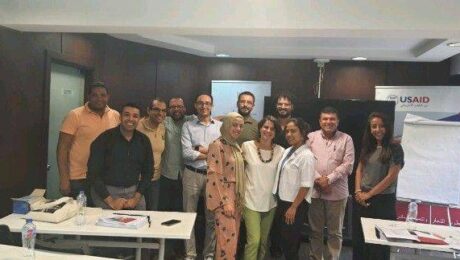
As part an on-going integrated capacity enhancement initiative of the USAID TRADE project to strengthen the Egyptian Food Export Council (FEC) and their members’ capacity to access the US market, Dr Faour-Klingbeil delivered the official course “Preventive Controls Qualified Individual (PCQI)” for 12 SMEs at the FEC premises from 20-22 September 2022. The course aimed to support Egyptian SMEs in the food sector better understand how to develop a Food Safety Plan and meet the FDA food safety requirements to improve compliance and enhance their market access and food exports. As part an on-going integrated capacity enhancement initiative of the USAID TRADE project to strengthen the Egyptian Food Export Council (FEC) and their members’ capacity to access the US market, Dr Faour-Klingbeil delivered the official course “Preventive Controls Qualified Individual (PCQI)” for 12 SMEs at the FEC premises from 20-22 September 2022. The course aimed to support Egyptian SMEs in the food sector better understand how to develop a Food Safety Plan and meet the FDA food safety requirements to improve compliance and enhance their market access and food exports.
Strengthening the institutional landscape and resilience to crises in food safety in Tunisia
Friday, 17 September 2021
DFK has joined as a team leader in the project “Strengthening Food Safety and Consumer Health Protection in Tunisia, ” implemented within the main technical cooperation framework between Germany and Tunisia. This project is set by the German Federal Institute for Risk Assessment and the Federal Office of Consumer Protection and Food Safety (BVL), supported by the German Federal Ministry for Economic Development & cooperation. The research project aims to strengthen the institutional capacities and resilience of the food safety system in Tunisia. The research team will identify stakeholder roles and responsibilities through stakeholder analysis by applying the participatory net-mapping method to illustrate the level of coordination and cooperation between the different Tunisian actors in the food safety sector. In addition, the team will assess the capacities and needs of the supply chain stakeholders to identify strengths and weaknesses and formulate strategies to address gaps and capacity-building needs. A food safety crisis simulation and an analysis of the national food outbreak management and response mechanisms will be conducted to explore the level of resilience of the system and craft targeted strategies to prevent foodborne diseases.
Expert group meeting on the scope and setting up of an Arab – Good Agricultural Practices (ARAB – GAP) framework
Wednesday, 01 June 2016
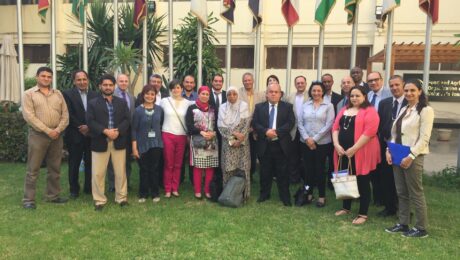
Cairo, Egypt, 31 May – 1 June 2016: The United Nations Economic and Social Commission for Western Asia (ESCWA), in cooperation with the Food and Agriculture Organization / Regional Office for the Near East and North Africa (FAO-RNE), organized an Expert Group Meeting on the Scope and Setting up of an Arab – Good Agricultural Practices (Arab – Gap) Framework, in Cairo during 31 May – 1 June 2016. The meeting brought together experts from government, non-government and private organizations with working experience in the areas of food quality and safety and good agricultural practices for improved food safety. The meeting was held within the framework of a project financed by the Swedish International Development Cooperation Agency (Sida), a component of which aims at promoting the adoption and use of GAPs for a responsible, effective and efficient food value chain in the Arab region. The meeting provided a platform to enhance understanding of GAPs and their relation to food safety and quality issues; review existing national, regional and international experiences; and exchange views on a proposed Arab-GAP framework. The meeting resulted in a set of conclusions on how an Arab-GAP framework could be structured, and what modalities need to be followed for its operationalization. Options were formulated on a way forward to promote the adoption of GAPs for improved food quality and safety in domestic food markets. Dr. Dima Faour-Klingbeil, ESCWA food safety consultant under the project, presented a preliminary proposal for the Arab-GAP as a third party voluntary scheme. In terms of scope, it is proposed that the Arab-GAP would cover fresh produce, being the most potentially hazardous foods that have caused recent outbreaks globally. Dr. Faour-Klingbeil noted that food safety systems have evolved over the past years and that the number of certified producers worldwide is increasing. She went on to briefly present the Arab GAP guide prepared by the Arab Organization for Agricultural Development (AOAD) in 2007, and which builds on the GLOBALG.A.P. framework. See the report here.
Training on Food Safety and Hygiene in Maasser el-Shouf – Lebanon
Saturday, 28 February 2015
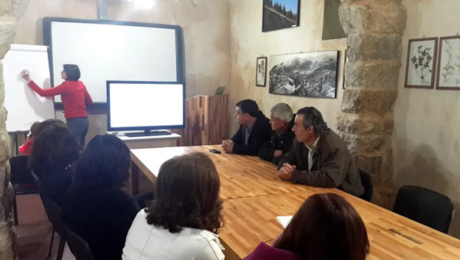
On February 28, a training session on “Food Safety and Hygiene” was organized and delivered in Maasser el-Shouf for the hosts of Darb el Karam in the Higher Shouf region. The training was attended by homemade-moune producers and “table d’hote” and B&B managers. The training delivered by Dr. Dima Faour-Klingbeil covered the basic concepts of food safety and hygiene tailored to home cooking and moune making practices. The training is part of the USAID funded project entitled “Establishing A Food Trail in Higher Shouf and West Beqaa” in the framework of the Lebanon Industry Value Chain Development (LIVCD) Project. The food trail “Darb el Karam” is being implemented by the Environment and Sustainable Development Unit (ESDU) at the American University of Beirut and the Food Heritage Foundation in collaboration with the Shouf Biosphere Reserve (SCBR).
Training on Food Safety and Hygiene in West Bekaa – Lebanon
Saturday, 24 January 2015
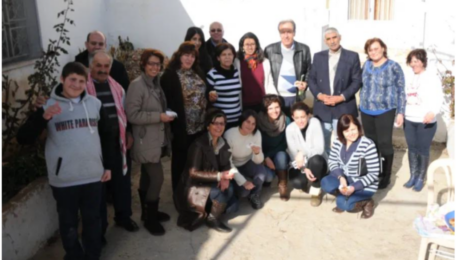
On January 24 2015, a training session on “Food Safety and Hygiene” was organized in Ein Zebde B&B in West Bekaa – Lebanon. The training was provided by Dr. Dima Faour-Klingbeil and covered the basic concepts of food safety and hygiene tailored to home cooking and moune making practices. This interactive and participatory training targeted Mouneh producers, hosts of “Tables d’Hote” and owners of small family restaurants on the West Bekaa Food Trail. Attendees expressed their satisfaction with the training and the need for continuous lectures of the sort, especially in the wake of recent food safety issues. This workshop is part of the USAID funded project entitled “Establishing A Food Trail in Higher Shouf and West Beqaa” in the framework of the Lebanon Industry Value Chain Development (LIVCD) Project. The food trail is being implemented by the Environment and Sustainable Development Unit (ESDU) at the American University of Beirut and the Food Heritage Foundation in collaboration with the Shouf Biosphere Reserve (SCBR).
- 1
- 2