FOOD SAFETY: “ADDED VALUE” TO THE VALUE CHAIN – EXAMPLE FROM AGRI-FOOD SECTOR, LEBANON
Monday, 01 December 2014
1-3 December 2014: Dr. Faour-Klingbeil was invited as a speaker in the Workshop on Capacity Building on Value Chain Analysis for Agribusiness for OIC Countries. She presented “Food Safety: “Added Value” to the Value Chain – Example From Agri-Food Sector Lebanon“. As produce is transported from the farm to the market place, and finally to the consumer’s fork, it is subjected to a range of handling, processing and storage conditions at each step of the food chain; hence there are numerous opportunities for contamination and the contemporary global agri-food value chain can quickly spreads the risks worldwide. Food safety violations or failures at any points of the food chain may have a devastating impact economically and on the health bills (consumers and the state). Indeed, the microbiological indicators of our case study showed that samples of raw vegetables along the chain pose risks on consumers’ health and would not fulfill the requirements for added value products. Therefore, for developing a sustainable food value chain, it is highly recommended to underpin the food safety culture within the value chain framework through risk-reduction strategies, adoption of standards and the reinforcement of commitment of all stakeholders by on-going educational interventions taking into account the social, economic and cultural factors that constrain behavioral changes.
Seminar on food inspection models –
Wednesday, 14 November 2012
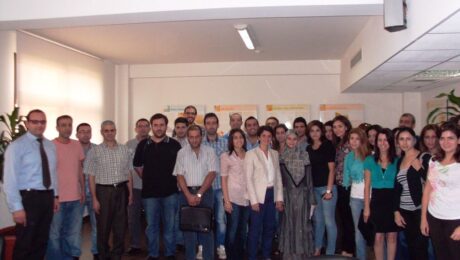
November 2012: within the capacity development framework for the health inspectors in the Ministry of Economy in Lebanon, Dr. Faour-Klingbeil was invited to deliver a seminar on food inspection models. Her talk covered “Approaches in Food inspection: An Insight to practices in the UK“.
- 1
- 2