
Microbiological quality of ready-to-eat fresh vegetables and their link to food safety environment and handling practices in restaurants in Lebanon
Thursday, 08 October 2020
The increased consumption of ready-to-eat (RTE) salads outside homes as a result of a fast paced lifestyle, awareness on their nutritional attributes and enhanced processing technology is well documented. Outbreak investigations often indicate that food service establishments greatly contribute to food-borne illnesses involving fresh produce. Fifty small and medium sized (SME) restaurants in Beirut were surveyed for their food safety climates. A total of 118 samples fresh-cut RTE salads vegetables and 49 swabs of knives and cutting boards were collected for microbiological analysis. A number of food safety practices concerns were identified in this study. The general lack of cleaning and sanitization procedures combined with a clear evidence of cross-contamination opportunities were generally reflected in the overall unsatisfactory quality of RTE vegetables. The majority of SMEs were unaware of the significance of applying control measures when handling vegetables and of the fundamental requirements for separate sinks used for hand-washing and washing vegetables. The inappropriate sanitation measures were not applied in 60% of the premises and a large percentage of food businesses (64%) lacked hand-washing sinks. A large proportion (84%) reported that the wash water was neither treated nor filtered and did not use sanitizers. More than half of the RTE salad vegetables were unsatisfactory due to E. coli and Listeria spp. counts that exceeded the criteria limits >100 CFU/g indicating poor hygienic practices and sanitary conditions. High frequency of S. aureus was also observed indicating poor hygiene practices of food handlers. Presence of Listeria monocytogenes and Salmonella spp. were traced back to samples obtained from restaurant that had no hand-washing sinks, fresh vegetables washing sinks, and adequate preparation and storage areas; the corresponding inspection rating recorded 32 over 100 possible points. The high microbial population size on chopping board surfaces offered an additional assumption for the actual contamination levels observed on RTE vegetables. As the correlation between the total inspection scores and the microbiological indicators were found not significant, our study confirmed that the total inspection scores per se would not directly indicate the microbiological safety of RTE vegetables in the restaurants and that the strategy of end-product testings do not and will not provide safe vegetables to consumers. Interestingly, there were variations in microbial counts and a significant correlation of high Listeria levels with individual inspection components, i.e., the inadequate cleaning and poor cross-contamination preventive measures, which emphasized that shortfalls in those particular points in the processing environment possibly indicate the presence of pathogens, e.g., L. monocytogenes on fresh vegetables. Therefore, the applications of critical control points for the preparation of fresh salad vegetables and personnel training on the associated bacterial hazards are fundamentals, particularly when salads are prepared in small working facilities in SMEs. The high microbial loads in RTE vegetables found in this work serve as an indicator for the need to promote awareness and a guidance for local authorities on the critical areas commonly identified in the SMEs that most likely affect the safety of fresh vegetables. It underscored the vigilant cleaning and sanitation procedures to reduce or eliminate contamination and cross-contamination risks that may occur at the pre-farm gate and throughout the supply chain stages.
- Published in Ready to eat vegetables
The transfer rate of Salmonella Typhimurium from one contaminated parsley to other consecutively chopped batches- Modeling “Tabbouleh” preparation
Thursday, 08 October 2020
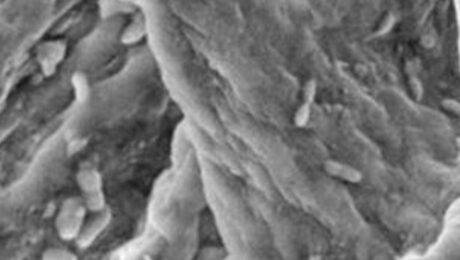
It is becoming more evident that Salmonella-associated outbreaks are not limited to contaminated foods of animal origin; they are periodically linked to consumption of fresh produce, including parsley and lettuce and S. Enteritidis and S. Typhimurium have been commonly isolated from fresh vegetables. Salmonella spp. can be transferred to the food chain directly from human or animal faecal sources, run-off of nearby farms, untreated manure, or from contaminated irrigation water. Additionally, there are various routes for cross-contamination in the kitchen and processing environments. Of food contact surfaces, cutting boards were shown to represent critical risk factors of cross-contamination and recontamination events. In many Mediterranean and Middle Eastern countries, leafy green parsley is typically eaten raw and prepared by fine chopping several batches. Because of the convoluted nature of parsley leaves and no precedent for transfer studies with this vegetable, we chose parsley to evaluate the transfer rate of S. Typhimurium in scenarios that resemble normally occurring operations in restaurants and home kitchens. The aim was to quantify the transfer rate of Salmonella across all chopped batches from one originally contaminated bundle of parsley. The transfer of bacterial cells to parsley chopped via water washed cutting board recorded high values, 64.0%. S. Typhimurium was apparently readily transferred into cutting boards, and later was capable of contaminating chopped parsley both at instant contact and at 24 h after washing the cutting board with water or soapy water combined with sponge scrubbing, with the ability to cross-contaminate the entire batches of leafy greens. Interestingly, considerable amounts of bacteria were transferred to 6 sets of clean parsley even when the contamination levels of parsley at the source was low. It was evident in this study that the density of bacteria can remain constant up to 24 h supported by nutrients abundance. We believe that the survival of S. Typhimurium for a prolonged time (24 h) has been probably sustained by remaining substrates from parsley juice within knives-scars and fissures on the plastic boards’ surfaces which have been shown to be very difficult to clean and disinfect, although this may vary among the types of plastic cutting boards.Apparently, the simple domestic washing methods applied in restaurants using water and soapy water with sponge scrubbing (Faour-Klingbeil et al., 2016 http://www.sciencedirect.com/science/article/pii/S0023643816304625) reduced the transfer rate to all batches of parsley chopped subsequent to the contaminated samples on the same surface, but it did not effectively eliminate the risk of cross-contamination at instant and 24 h exposure to bacteria. Therefore, the application of additional sanitation procedures such as hypochlorite solution should be a fundamental requirement after use with fresh produce not only after use with raw meat and poultry, especially as parsley is not further treated (ready-to-eat) and if there is a likelihood of inadequate food safety measures at harvest and post-harvest stages.
- Published in Ready to eat vegetables

Prevalence of antimicrobial – resistant Escherichia coli from raw vegetables in Lebanon
Sunday, 08 September 2019
Fresh produce has been implicated in a number of documented outbreaks of foodborne illness caused by bacteria, viruses, and parasites. Shiga toxin-producing Escherichia coli (STEC) have been detected on vegetables, raising concerns about the prevalence of E. coli contamination in produce, which can take place at various points from farm to fork. The prevalence of antimicrobial-resistant E. coli and potential transmission from soils and in the animal production environment to fresh produce at harvest has been documented, as has the further flow of resistance from fresh produce bacteria via gene transfer to enterobacterial strains in humans.The most common route for fresh produce contamination is at the pre-harvest stage, when microorganisms from animal feces, contaminated irrigation water, and wild and domestic animals can be deposited in crops. Even though foodborne disease outbreaks due to contamination of fruit and leafy green vegetables with pathogens have been rarely documented in Lebanon or the whole Middle East Region, they undoubtedly occur based on surveillance data from other regions. Therefore, the study aimed to detect the presence of STEC and multidrug-resistant (MDR) E. coli on fresh vegetables and water from different sources along the fresh produce supply chain in Lebanon. The virulence genes stx1 and stx2 were not detected in any of the isolates. However, resistance to streptomycin and a first-generation cephalosporin (represented by cephalothin) was observed among all the 60 isolates (100%). The second-largest prevalence of resistant isolates was observed with ampicillin (78%). More than a third of the study isolates were resistant to tetracycline (42%). Moreover, resistance to three or more antimicrobials in 60% of the isolates . It is postulated that the inadequate post-harvest washing contributed to transmission of antimicrobial-resistant E. coli at wholesale and retail levels. The present study demonstrated that fresh vegetables harbor MDR E. coli and their consumption poses risks of increasing the reservoir of antimicrobial resistance in the intestines of the Lebanese population. Greater emphasis should be placed on vigilant sanitation measures at the consumption level, and effective national risk mitigation strategies are crucial to minimize fecal contamination in the early stages of production, particularly in the post-harvest washing processes.
- Published in Ready to eat vegetables