Safety and quality of water use and reuse in the production and processing of dairy products
Wednesday, 07 June 2023
In 2020, the 43rd session of the Codex Alimentarius Commission approved the new work entitled “Development of Guidelines for the Safe Use and Reuse of Water in Food Production” proposed by the 51st session of the Codex Committee on Food Hygiene. To support this work, the Joint FAO/WHO Expert Meeting on Microbiological Risk Assessment (JEMRA) was asked to provide scientific advice regarding safe use and reuse of water in the dairy sector. Dr. Dima participated in the JEMRA experts panel tasked to provide clear and practical guidance on risk-based approaches to assess and manage fit-for-purpose water sourcing, use and reuse in the dairy sector. The collective efforts led to publication of a report that describes the application of the concept of fit-for-purpose water for use in the production and processing of dairy products. Report available in this link: FAO & WHO. 2023. Safety and quality of water use and reuse in the production and processing of dairyproducts – Meeting report. Microbiological Risk Assessment Series, No. 40. Rome, FAO.https://doi.org/10.4060/cc4081en
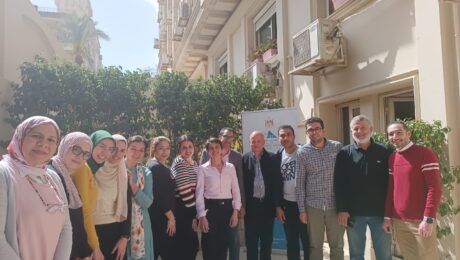
PCQI WORKSHOP – USAID Trade Reform & Development in Egypt (TRADE) 2023
Friday, 24 March 2023
For the second year, and as part of the integrated capacity enhancement initiative of the USAID TRADE project to strengthen the Egyptian Food Export Council (FEC) and their members’ capacity to access the US market, Dr Faour-Klingbeil delivered the official course “Preventive Controls Qualified Individual (PCQI)” for 12 SMEs at the FEC premises from 07.- 09.03.2023. The course aimed to support Egyptian SMEs in the food sector better understand how to develop a Food Safety Plan and meet the FDA food safety requirements to improve regulatory compliance and enhance food exports.
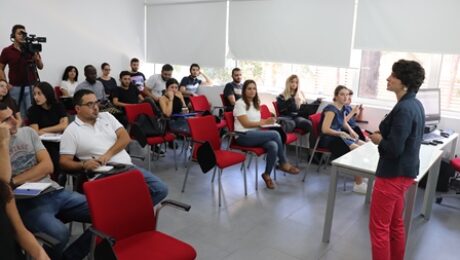
FAFS Lecture Series | An overview of the FSMA and its implications for food exporters
Wednesday, 16 December 2020
As part of the American University of Beirut FAFS (The Faculty of Agricultural and Food Sciences ) Lecture Series, Dr. Dima was invited to deliver an open lecture on “An overview of the Food and Drug Administration Food Safety Modernization Act (FSMA) and its implications for food exporters” that took place on the 10th of October 2019. About the lecture: Foodborne disease is a significant burden worldwide. In the United States, it is estimated that 48 million people get sick, 128 000 are hospitalized, and 3000 die annually from contaminated food or beverages. Prompted by the increasing prevalence of imports, high-profile food outbreaks, food fraud, and emerging hazards, the U.S. Food Safety Modernization Act was signed into law in 2011, the first historical reform to the legislative landscape of the food and beverage industry in over 70 years. FSMA has made fundamental changes to U.S. food laws. It shifted the focus of food safety from reactive to preventive approach and gave the U.S. Food and Drug Administration explicit authority and broader prevention mandate to protect consumers’ health. Instead of relying only on port-of-entry inspection, FSMA emphasizes key regulations that span across the food supply chain. Among other modifications, it imposes new responsibilities on food importers to verify that their foreign suppliers of food for human and animal consumption meet applicable FDA safety standards to ensure the safety of food imported into the U.S.

Customised Internal Training Course Development On the Current Good Manufacturing Practice, Hazard Analysis, and Risk-Based Preventive Controls Rule.
Friday, 30 October 2020
This engagement marked the beginning of a continuing collaboration with August Storck KG. In 2025, DFK was further engaged to conduct a pre-FDA inspection compliance audit at the company’s Berlin chocolate manufacturing facility, reflecting Storck’s continued commitment to strengthening their food safety systems and maintaining alignment with U.S. FDA export requirements.
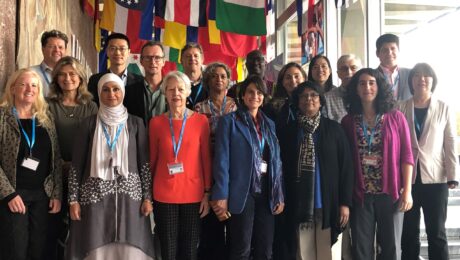
Joint FAO/WHO Expert meeting on the Safety and Quality of Water Used in Food Production and Processing
Saturday, 14 September 2019
Dr. Dima was invited to participate in the Joint FAO/WHO Expert meeting on the Safety and Quality of Water Used in Food Production and Processing in Geneva, Switzerland, 23-27 September 2019. The purpose of the meeting was to develop clear and practical guidance on the criteria and parameters that can be used to determine if water is ‘fit-for-purpose’ for several different agricultural purposes. This work is still under review. As a member of the FAO/WHO joint Expert Meeting on the Microbiological Risk Assessment (JEMRA), she contributed to developing practical guidance and fit-for-purpose microbiological criteria for water used in fresh fruit and vegetables and the published WHO document. Enjoy the read: FAO and WHO 2021. Safety and quality of water used with fresh fruits and vegetables. Microbiological Risk Assessment Series No. 37. Rome. https://doi.org/10.4060/cb7678en

FSMA Preventive Controls Gap Analysis for Lallemand GmbH, Vienna
Sunday, 30 June 2019
DFK conducted a one-day FSMA gap analysis audit for Lallemand GmbH in Vienna, assessing the facility’s food safety systems against 21 CFR Part 117 requirements for yeast and Active Pharmaceutical Ingredient production destined for the U.S. market
Programm „Aktiv und gesund durchs Leben“ – Lebensmittelsicherheit – Active and healthy through food safety
Sunday, 28 October 2018
Vortrag zum Thema “Lebensmittelsicherheit” von Dr. Dima Faour-Klingbeil. Wie entstehen Lebensmittelvergiftungen? Wie kann ich sie vermeiden? Wann sind Lebensmittel nicht mehr genießbar? Lecture on “Food Safety” by Dr. Dima Faour-Klingbeil. How does food poisoning occur? How can I avoid it? When is food no longer edible? presented for Kargah health awareness program. Kargah is a non-profit intercultural organization in Hanover that focuses on providing educational, consulting, and cultural activities.
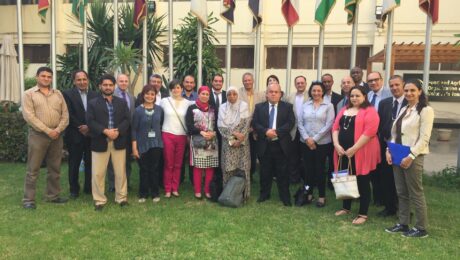
Expert group meeting on the scope and setting up of an Arab – Good Agricultural Practices (ARAB – GAP) framework
Wednesday, 01 June 2016
Cairo, Egypt, 31 May – 1 June 2016: The United Nations Economic and Social Commission for Western Asia (ESCWA), in cooperation with the Food and Agriculture Organization / Regional Office for the Near East and North Africa (FAO-RNE), organized an Expert Group Meeting on the Scope and Setting up of an Arab – Good Agricultural Practices (Arab – Gap) Framework, in Cairo during 31 May – 1 June 2016. The meeting brought together experts from government, non-government and private organizations with working experience in the areas of food quality and safety and good agricultural practices for improved food safety. The meeting was held within the framework of a project financed by the Swedish International Development Cooperation Agency (Sida), a component of which aims at promoting the adoption and use of GAPs for a responsible, effective and efficient food value chain in the Arab region. The meeting provided a platform to enhance understanding of GAPs and their relation to food safety and quality issues; review existing national, regional and international experiences; and exchange views on a proposed Arab-GAP framework. The meeting resulted in a set of conclusions on how an Arab-GAP framework could be structured, and what modalities need to be followed for its operationalization. Options were formulated on a way forward to promote the adoption of GAPs for improved food quality and safety in domestic food markets. Dr. Dima Faour-Klingbeil, ESCWA food safety consultant under the project, presented a preliminary proposal for the Arab-GAP as a third party voluntary scheme. In terms of scope, it is proposed that the Arab-GAP would cover fresh produce, being the most potentially hazardous foods that have caused recent outbreaks globally. Dr. Faour-Klingbeil noted that food safety systems have evolved over the past years and that the number of certified producers worldwide is increasing. She went on to briefly present the Arab GAP guide prepared by the Arab Organization for Agricultural Development (AOAD) in 2007, and which builds on the GLOBALG.A.P. framework. See the report here.
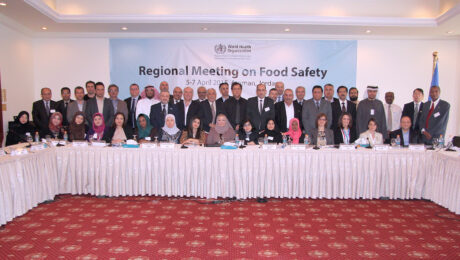
FAO Food Safety Meeting in Jordan
Tuesday, 14 April 2015
The WHO regional Centre for Environmental Health Action (CEHA), held a regional meeting for food safety officers appointed by ministries of health and ministries of agriculture in Amman, Jordan on 5–7 April 2015. Dr. Dima Faour-Klingbeil was invited as a speaker and temporary advisor. As part of the regional meeting, representatives from 19 countries along with international experts and several United Nations (UN) agencies took part in the regional celebration of the 2015 World Health Day on Food Safety on 7 April. The objectives of the meeting were to: • update participants on the state of food safety in the Region and Member States (status, gaps and challenges); • present emerging food safety issues and priorities at the global level; • identify areas to be strengthened and the way forward; and • celebrate World Health Day 2015 on Food Safety in the Eastern Mediterranean Region under the motto “From farm to plate – make food safe”. Dr. Dima’s presentation is found here.
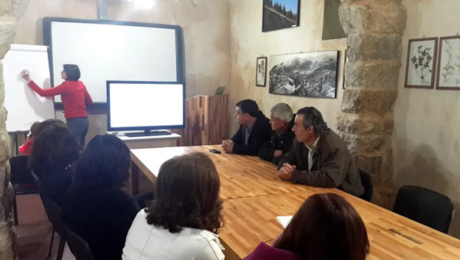
Training on Food Safety and Hygiene in Maasser el-Shouf – Lebanon
Saturday, 28 February 2015
On February 28, a training session on “Food Safety and Hygiene” was organized and delivered in Maasser el-Shouf for the hosts of Darb el Karam in the Higher Shouf region. The training was attended by homemade-moune producers and “table d’hote” and B&B managers. The training delivered by Dr. Dima Faour-Klingbeil covered the basic concepts of food safety and hygiene tailored to home cooking and moune making practices. The training is part of the USAID funded project entitled “Establishing A Food Trail in Higher Shouf and West Beqaa” in the framework of the Lebanon Industry Value Chain Development (LIVCD) Project. The food trail “Darb el Karam” is being implemented by the Environment and Sustainable Development Unit (ESDU) at the American University of Beirut and the Food Heritage Foundation in collaboration with the Shouf Biosphere Reserve (SCBR).