FAFS Lecture Series | An overview of the FSMA and its implications for food exporters
Wednesday, 16 December 2020
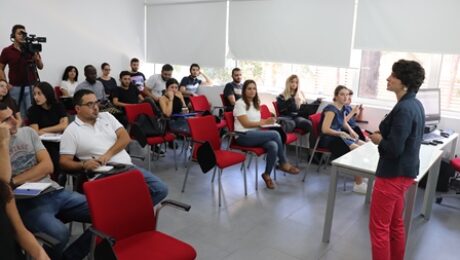
As part of the American University of Beirut FAFS (The Faculty of Agricultural and Food Sciences ) Lecture Series, Dr. Dima was invited to deliver an open lecture on “An overview of the Food and Drug Administration Food Safety Modernization Act (FSMA) and its implications for food exporters” that took place on the 10th of October 2019. About the lecture: Foodborne disease is a significant burden worldwide. In the United States, it is estimated that 48 million people get sick, 128 000 are hospitalized, and 3000 die annually from contaminated food or beverages. Prompted by the increasing prevalence of imports, high-profile food outbreaks, food fraud, and emerging hazards, the U.S. Food Safety Modernization Act was signed into law in 2011, the first historical reform to the legislative landscape of the food and beverage industry in over 70 years. FSMA has made fundamental changes to U.S. food laws. It shifted the focus of food safety from reactive to preventive approach and gave the U.S. Food and Drug Administration explicit authority and broader prevention mandate to protect consumers’ health. Instead of relying only on port-of-entry inspection, FSMA emphasizes key regulations that span across the food supply chain. Among other modifications, it imposes new responsibilities on food importers to verify that their foreign suppliers of food for human and animal consumption meet applicable FDA safety standards to ensure the safety of food imported into the U.S.

The Chamber of Commerce in Hanover organized FSMA-related workshops
Monday, 09 September 2019
For the second year in a row, the chamber of Commerce in Hanover organized FSMA-related workshops for the agricultural and food industry and the medical and health industry on 9 Septemeber 2019. The event ” Sales Workshop USA: FDA Regulations” took place in Hannover on the 9th of September 2019. DFK joined as a speaker and presented “Exporting to the United States? What you need to know on FSMA rule for Food Facilities“. Both workshops hosted a number of experts giving talks and presentations on several important issues related to exporters to the US: sales, marketing channels, compliance issues and regulatory requirements. Many interesting questions on FSMA during the B2B meetings reflected the importance of such interactive discussions and close communication.

Contracted auditing services – Gluten-Free Certification Organization (GFCO)
Saturday, 17 November 2018
Dr. Dima is contracted by the Gluten-Free Certification Organization (GFCO), the leader in gluten-free certification, to provide auditing services for the gluten-free food products and related production processes. The auditing services cover a wide range of product categories, and national and international food processing facilities to ensure compliance with the GFCO Certification Standards.
Programm „Aktiv und gesund durchs Leben“ – Lebensmittelsicherheit – Active and healthy through food safety
Sunday, 28 October 2018
Vortrag zum Thema “Lebensmittelsicherheit” von Dr. Dima Faour-Klingbeil. Wie entstehen Lebensmittelvergiftungen? Wie kann ich sie vermeiden? Wann sind Lebensmittel nicht mehr genießbar? Lecture on “Food Safety” by Dr. Dima Faour-Klingbeil. How does food poisoning occur? How can I avoid it? When is food no longer edible? presented for Kargah health awareness program. Kargah is a non-profit intercultural organization in Hanover that focuses on providing educational, consulting, and cultural activities.

The Food Forum USA and Canada
Monday, 17 September 2018
17 September 2018: DFK was invited as a speaker to join the leading experts in the food industry and trade from the US, Canada and Germany in the Food Forum USA and Canada organized by the German Chamber of Commerce and Industry in Hannover. The forum featured presentations, experts talks, and conversations on several important trade and regulatory issues that German companies need to know, these included: industry patterns and current market trends, customer habits, import regulations or distribution channels. DFK presented an overview on the FSMA key requirements, registrations of food facilities, the role of different US agencies and the US agents, and what the industry should know and do to prepare for the FDA FSMA inspections.
FAO Food Safety Meeting in Jordan
Tuesday, 14 April 2015
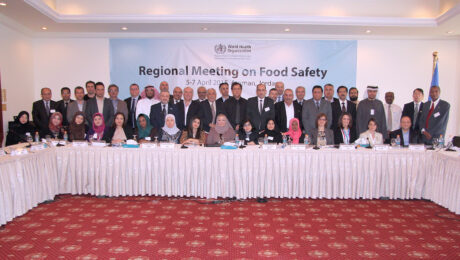
The WHO regional Centre for Environmental Health Action (CEHA), held a regional meeting for food safety officers appointed by ministries of health and ministries of agriculture in Amman, Jordan on 5–7 April 2015. Dr. Dima Faour-Klingbeil was invited as a speaker and temporary advisor. As part of the regional meeting, representatives from 19 countries along with international experts and several United Nations (UN) agencies took part in the regional celebration of the 2015 World Health Day on Food Safety on 7 April. The objectives of the meeting were to: • update participants on the state of food safety in the Region and Member States (status, gaps and challenges); • present emerging food safety issues and priorities at the global level; • identify areas to be strengthened and the way forward; and • celebrate World Health Day 2015 on Food Safety in the Eastern Mediterranean Region under the motto “From farm to plate – make food safe”. Dr. Dima’s presentation is found here.
FOOD SAFETY: “ADDED VALUE” TO THE VALUE CHAIN – EXAMPLE FROM AGRI-FOOD SECTOR, LEBANON
Monday, 01 December 2014
1-3 December 2014: Dr. Faour-Klingbeil was invited as a speaker in the Workshop on Capacity Building on Value Chain Analysis for Agribusiness for OIC Countries. She presented “Food Safety: “Added Value” to the Value Chain – Example From Agri-Food Sector Lebanon“. As produce is transported from the farm to the market place, and finally to the consumer’s fork, it is subjected to a range of handling, processing and storage conditions at each step of the food chain; hence there are numerous opportunities for contamination and the contemporary global agri-food value chain can quickly spreads the risks worldwide. Food safety violations or failures at any points of the food chain may have a devastating impact economically and on the health bills (consumers and the state). Indeed, the microbiological indicators of our case study showed that samples of raw vegetables along the chain pose risks on consumers’ health and would not fulfill the requirements for added value products. Therefore, for developing a sustainable food value chain, it is highly recommended to underpin the food safety culture within the value chain framework through risk-reduction strategies, adoption of standards and the reinforcement of commitment of all stakeholders by on-going educational interventions taking into account the social, economic and cultural factors that constrain behavioral changes.
Seminar on food inspection models –
Wednesday, 14 November 2012
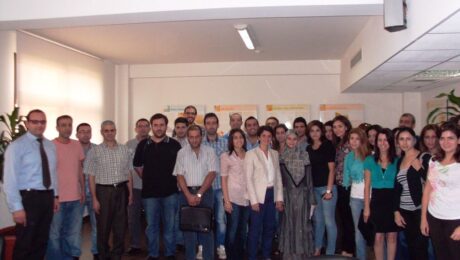
November 2012: within the capacity development framework for the health inspectors in the Ministry of Economy in Lebanon, Dr. Faour-Klingbeil was invited to deliver a seminar on food inspection models. Her talk covered “Approaches in Food inspection: An Insight to practices in the UK“.
- 1
- 2